The Neuroscience Behind Everyday Food Routines
Introduction
Every day, we make countless decisions about food without conscious thought. We reach for our usual breakfast. We eat lunch at our habitual time. We follow evening snack routines we've performed hundreds of times. This automatic quality of eating behaviour has a neuroscientific foundation.
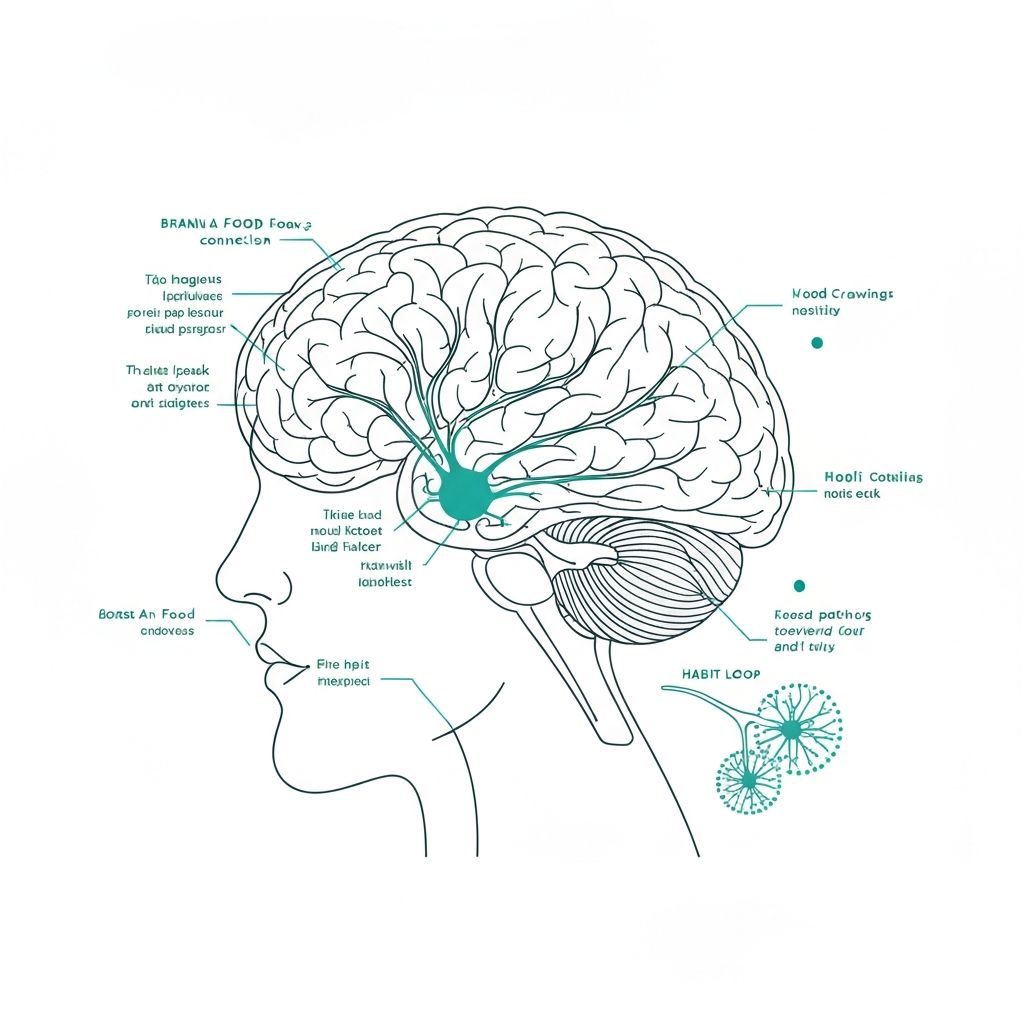
The Habit Loop: A Neural Framework
Researchers studying habit formation have identified a recurring pattern called the habit loop, consisting of three components:
Cue: An environmental trigger that initiates the behaviour. This might be the time of day, a location, the presence of certain foods, or even an emotional state.
Routine: The behaviour itself—the eating action that follows the cue. This is the habit in its most visible form.
Reward: The positive outcome or sensation that follows the routine. For eating, this might be the taste, satiation, or emotional satisfaction.
When this sequence repeats consistently, neural pathways strengthen. The brain learns to anticipate the reward following the cue, and the routine becomes increasingly automatic.
Automaticity and Decision-Making Efficiency
One key function of habit is efficiency. Automatic behaviours require less mental resources than conscious decisions. When eating routines become habitual, your brain can direct cognitive energy elsewhere.
This automaticity develops in brain regions associated with procedural memory and motor control. As routines repeat, activity shifts from the prefrontal cortex (conscious decision-making) to the basal ganglia (automatic action selection). This neural shift is reflected in the felt experience—the behaviour starts to feel less deliberate and more automatic.
Neuroplasticity and Habit Strength
The brain's capacity to change is called neuroplasticity. Habits leverage this capacity through repeated activation of neural circuits. Each time you perform a routine in response to a cue, you strengthen the connection between them.
This strengthening follows predictable patterns. Frequent, consistent repetition creates stronger associations than irregular practice. The environment matters too—routines performed in consistent contexts develop stronger neural associations with those contexts.
Individual Differences in Habit Formation
Not everyone develops habits at the same rate or with the same strength. Neuroscientific research suggests individual differences in:
- Dopamine sensitivity: Variation in reward-related neurotransmitter systems affects how strongly rewards reinforce routines
- Working memory capacity: Differences in prefrontal cortex function affect conscious decision-making tendencies
- Environmental sensitivity: Some individuals' brains show stronger responses to environmental cues
- Impulse control regions: Variation in prefrontal-striatal connectivity affects habit versus goal-directed behaviour balance
Context and Context-Dependent Habits
The brain doesn't store habits in isolation. Habits are tied to the contexts in which they develop. Eating a certain food when commuting differs neurologically from eating the same food at home because different environmental cues activate different neural patterns.
This context-dependence has real-world implications. People often find their usual eating routines differ when they travel or change their environment. The neural associations between cue and routine are specific to particular contexts.
The Role of Motivation and Goal-Directed Eating
Not all eating is habitual. Conscious, goal-directed eating activates different neural systems. When you deliberately choose what to eat based on preferences or plans, your prefrontal cortex is more actively involved. When you eat habitually, automatic systems dominate.
These systems interact dynamically. Fatigue or cognitive load can push you toward more habitual eating (relying on automatic systems). Conscious attention and motivation can activate goal-directed systems even for familiar foods.
Emotional and Stress-Related Eating
Emotions activate reward-related brain regions. Stress or emotional states can trigger habitual eating routines, even when not driven by hunger. This reflects the powerful connection between emotional neural systems and eating habit circuits.
Neuroimaging Evidence
Modern neuroimaging studies reveal distinct activation patterns for habitual versus goal-directed eating. Habitual eating shows activity in the dorsolateral striatum (procedural memory). Goal-directed eating activates the ventromedial prefrontal cortex (value evaluation) and ventral striatum (reward). This neurological distinction reflects the phenomenological difference in how these eating modes feel.
Implications and Individual Variation
Understanding the neuroscience of eating habits reveals why routines are powerful and automatic. It also highlights that individuals vary significantly in habit strength, context sensitivity, and the balance between habitual and goal-directed eating.
This neuroscientific knowledge is offered as educational information. Individual eating patterns are influenced by complex neurobiology, psychology, environment, and personal circumstances that vary considerably across populations.